In most U.S. states, it is legal to use a hidden camera — commonly called a nanny cam — in your own home without telling your babysitter, as long as the camera records video only and is placed in common areas like the living room or kitchen. Audio recording without consent is a separate legal issue and is restricted in many states. Always check your state’s specific laws before recording.
I get this question more than almost any other. And I want to give you a straight answer, because the wrong information here can get you into real legal trouble — or leave your kids without the protection they deserve. As a dad, I’ve thought hard about this. As someone who sells hidden cameras for home security, I owe you the full picture, not just the parts that make a sale.
What follows is a practical breakdown of what you actually need to know before you point a camera at your living room and walk out the door. Know the rules first. Then act.
What are the federal laws on using a hidden camera in your own home?
At the federal level, the law generally allows video-only recording in your own home. The key piece of federal law to understand is the Electronic Communications Privacy Act (ECPA). It restricts the interception of electronic communications — but video surveillance without audio in a private residence you own or rent falls largely outside that restriction.
What that means practically: a video-only nanny cam in your living room, kitchen, or playroom is federally permissible. You are the homeowner or renter. You have a legal right to monitor what happens in your space, especially when it comes to the safety of your children.
The complication comes with audio. As soon as your nanny cam records sound, you’ve entered wiretapping territory. Federal law requires at least one-party consent for audio recording — meaning you, as a party to the household, may consent on behalf of the recorded environment. But many states have stricter rules. That’s where you need to pay attention.
Bottom line: video only, common areas, your own home — federally, you’re on solid ground. Add audio or move a camera into a bathroom or private bedroom, and you have a serious problem regardless of your state.
Does your state require you to tell the babysitter about the camera?
This is where the checklist gets critical. State laws vary significantly, and some states have strong privacy protections that go beyond federal minimums. Here’s what you need to watch for:
All-party consent states for audio recording: States like California, Florida, Illinois, Maryland, Massachusetts, Michigan, Montana, Nevada, New Hampshire, Oregon, Pennsylvania, and Washington require all parties to consent before audio is recorded. If your nanny cam records sound and you’re in one of these states, recording without disclosure could expose you to criminal liability — even in your own home.
Video-only recording: Even in all-party consent states, video-only recording in common areas of your own home is generally treated differently. But “generally” is not “always.” Some states have passed additional residential privacy laws that may apply.
Disclosure requirements: A small number of states and municipalities have begun enacting specific nanny cam or home recording disclosure laws. These are evolving. What was legally clear two years ago may have changed.
My strong advice: before you buy a camera and set it up, spend twenty minutes looking up your specific state’s laws on home surveillance and audio recording consent. This is not an area to guess. I’m not an attorney, and nothing I write here is legal advice — it’s a framework to point you in the right direction before you talk to someone who can actually advise you legally.
Where in your home can you legally place a hidden camera?
Location matters as much as technology. Even in states that allow video-only recording without disclosure, there are places a camera is never legal — regardless of who owns the home.
Areas where hidden cameras are never permitted under any circumstances:
- Bathrooms
- Bedrooms where a person has a reasonable expectation of privacy
- Changing areas
- Any space where someone is reasonably expected to be undressed or in a private state
Placing a camera in any of these locations — even in your own home, even with the best protective intentions — is illegal. Full stop. It doesn’t matter what your reason is. The law treats this as a serious violation, and it should.
Areas where video-only recording is typically permissible:
- Living rooms
- Kitchens and dining areas
- Hallways and entryways
- Nurseries and playrooms (video only, no audio — and confirm your state law)
- Exterior areas such as driveways and porches
The nursery question comes up a lot, and I want to handle it carefully. A camera in your child’s nursery or playroom, with no audio, used specifically to monitor your child’s safety — this is a scenario many families use and many states allow. But because a babysitter or caregiver is also present in that space, some legal interpretations may apply additional scrutiny. Know your state’s law. When in doubt, disclose. A simple statement to your babysitter — “We have a camera in the playroom for the kids’ safety” — removes all ambiguity.
What happens if you use a nanny cam illegally?
The consequences are real, and I want you to take this seriously. Using a hidden camera in a prohibited location or recording audio without required consent can result in:
- Criminal charges — in some states, illegal recording is a felony
- Civil lawsuits filed by the babysitter or caregiver
- Evidence being ruled inadmissible — meaning if you catch something on camera, it may not be usable in court if the recording itself was illegal
- Child custody complications if you’re in a family law situation
That last point stops people cold, and it should. You set up a camera to protect your kids. If that recording is inadmissible because you placed it illegally or recorded audio without consent in a restricted state, you’ve put in the effort and taken the risk for nothing. Worse, it could be used against you.
Do it right the first time. Know the rules. Place cameras legally. Consider disclosing — not because you’re required to in every state, but because a babysitter who knows about a camera and behaves the same way is exactly what you want.
What type of hidden camera is best for monitoring a babysitter at home?
Once you’ve verified you’re operating within your state’s laws, the equipment question becomes straightforward. Here’s what matters:
Video quality: You want clear footage, not a blurry image that tells you nothing. Look for cameras with at least 1080p HD resolution. If something happens, you need footage that holds up — not a grainy still that could be anyone.
Motion activation: Motion-triggered recording reduces how much footage you have to review and conserves storage. It also ensures the camera is capturing during the moments that actually matter.
Wi-Fi connectivity and remote viewing: A good home security hidden camera lets you view footage remotely from your phone. That live monitoring capability matters — you can check in without being there.
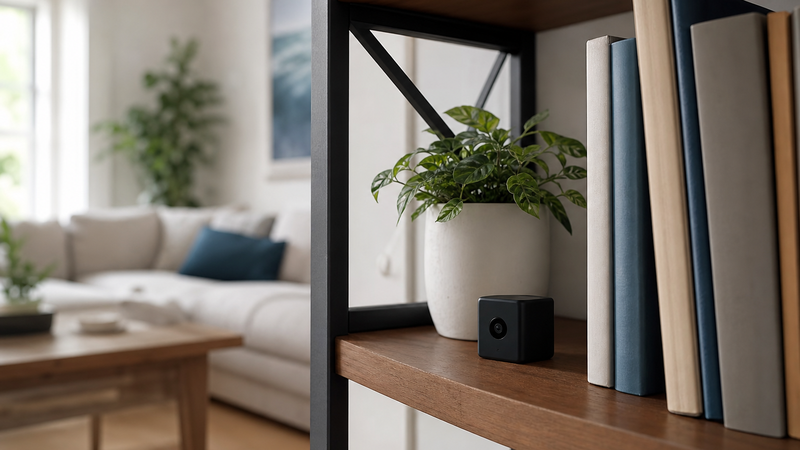
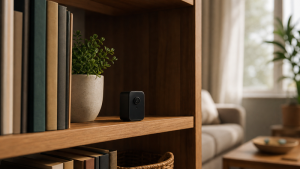
Discreet form factors: Cameras built into everyday objects — clocks, smoke detectors, picture frames — blend into a home environment without drawing attention. If you’ve chosen not to disclose the camera, the placement should not be obvious. If you have disclosed it, the placement just needs to be functional.
Local storage vs. cloud: Cameras that store footage locally to a memory card don’t require a monthly subscription and keep your footage off third-party servers. Cloud-based options offer convenience and backup if the device is tampered with. Both are valid choices depending on your priorities.
Audio toggle: Choose a camera that lets you disable audio recording, so you’re not inadvertently capturing sound in an audio-restricted state. This is an easy safeguard that keeps you compliant.
Should you just tell the babysitter about the camera?
Honestly? In many cases, yes. I know that feels counterintuitive. The whole point of a hidden camera is that you don’t tell anyone it’s there. But hear me out.
First, disclosure eliminates every legal risk associated with consent and notification. Completely. If your babysitter knows a camera is present, there is no gray area.
Second, disclosure is actually a deterrent. A babysitter who knows they are being monitored is less likely to behave inappropriately. That’s a protection mechanism on its own.
Third, most babysitters and caregivers today understand that home security cameras are common. Many are not bothered by them. A simple, matter-of-fact statement — “We have cameras in the main living areas for the kids’ safety” — is not an accusation. It’s a statement about how your household operates.
Some families prefer to keep cameras undisclosed, and in many states, that is their legal right for video-only recording in common areas. I’m not here to tell you what your household policy should be. I’m here to make sure you understand all the factors before you decide.
Frequently Asked Questions About Nanny Cam Laws and Home Surveillance
Is it legal to record a babysitter on video without their knowledge?
In most U.S. states, video-only recording in common areas of your own home — without audio — is legal without notifying the babysitter. Laws vary by state, and some states have stricter privacy protections. Always research your specific state’s laws before recording. This is not legal advice; consult an attorney if you’re uncertain.
Can I record audio with a nanny cam without telling anyone?
This depends on your state. Federal law requires one-party consent for audio recording, which you can provide as the homeowner. However, states like California, Florida, Illinois, Pennsylvania, and others require all-party consent. Recording audio without consent in a two-party consent state can be a criminal offense, even in your own home.
Can I put a hidden camera in my child’s bedroom?
Placing a video-only camera in a nursery or young child’s room for safety monitoring is practiced by many families and is generally treated differently than placing a camera in an adult’s private space. However, because a caregiver is also in that space, legal interpretations can vary. Consult your state’s laws and consider disclosing the camera to caregivers to avoid any legal risk.
What rooms are off-limits for hidden cameras no matter what?
Bathrooms, changing areas, and any space where a person has a reasonable expectation of privacy — such as a guest bedroom — are off-limits for hidden cameras under any circumstances. Placing a camera in these areas is illegal regardless of your state, your intentions, or whether you own the home. There are no exceptions.
Will illegal nanny cam footage hold up in court?
Footage recorded in violation of state or federal law may be ruled inadmissible in court. This means that even if you capture something serious on camera, prosecutors or family court may be unable to use it as evidence if the recording itself was unlawful. Recording legally from the start protects both your children and your ability to act on what you find.
Do nanny cam laws apply to other caregivers, like a home health aide?
Yes. The same legal framework that applies to babysitters generally applies to any in-home caregiver — home health aides, housekeepers, tutors, or anyone else in your home. The rules around video-only recording in common areas, audio consent requirements, and prohibited locations apply regardless of the caregiver’s role.
What’s the difference between a nanny cam and a regular security camera?
Functionally, the difference is mainly form factor and intention. A nanny cam is typically designed to blend into the environment — built into an everyday object — while a visible security camera is meant to be seen as a deterrent. Both record video. The same laws governing privacy, audio consent, and prohibited placement apply to both when used inside the home.
Can I use a hidden camera if I rent my home or apartment?
Generally, yes — the same state laws apply whether you own or rent. You have a reasonable expectation of privacy and security in your rented space. However, if you’re placing cameras in areas of a property you share with a landlord or other tenants, the legal picture becomes more complicated. Research your state’s laws and your lease agreement before installing any recording equipment.
Protecting your kids is not something you leave to chance. And it’s not something you do carelessly. Know what you’re allowed to do, do it correctly, and have a plan that actually holds up if something goes wrong. The right hidden camera, placed legally and used responsibly, is a legitimate tool for a parent who takes their family’s safety seriously.
At HerGuarded, we carry hidden cameras designed for home security and family protection — practical tools for real situations. If you have questions about what a specific camera does, how it stores footage, or whether it has audio, reach out. We’ll give you a straight answer. That’s the whole point of this store. And if you’re thinking about other personal safety tools beyond home monitoring — from pepper spray to personal alarms — browse what we carry and find what fits your life. Be aware. Be prepared. Be confident.