A stun baton is a contact weapon — you press it against someone and it delivers a painful electric shock on the spot. A Taser is a ranged device — it fires two small probes on wires up to fifteen feet away and uses electrical current to temporarily disrupt muscle control. Both are non-lethal tools designed to stop a threat, but they work in completely different ways and fit different situations and lifestyles. Neither one is universally better. The right choice depends on where you are, how you live, and what you’re willing to practice with.
I’ve had a lot of conversations with people trying to figure this out. A mom worried about walking to her car at night. A daughter setting up her first apartment. A guy who wants something for his wife when she travels for work. These are real people trying to make a real decision, and they deserve a straight answer — not a sales pitch. Let me walk you through what I know, the way I’d explain it to someone standing across the counter from me at Herguarded.
How does a stun baton actually work?
A stun baton is a handheld device — usually shaped like a flashlight or an elongated rod — with electrical contacts at one end. When you press those contacts against a person and activate the device, it releases a high-voltage, low-amperage shock. That shock causes pain and can disrupt muscle function at the point of contact. It doesn’t put someone to sleep. It hurts, it startles, and in many cases it gives you the seconds you need to get away.
What makes the baton different from a compact stun gun is reach. A standard pocket stun gun requires you to be right up against the person — maybe three to six inches away. A stun baton extends that distance to twelve, sixteen, even twenty or more inches depending on the model. That extra space matters. If someone gets too close in a parking garage or on a trail, that few extra inches of distance between your hand and their body can be the difference between a controlled response and a struggle.
At Herguarded we carry stun batons like the 100 Million Volt Stun Gun and the Stun Bat, which also function as flashlights — meaning you have a practical everyday tool that happens to double as a serious defensive option. That’s the kind of product I like. It doesn’t scream “weapon.” It just works.
One thing worth knowing: the electrical contacts on most stun batons run along a portion of the shaft, not just the tip. That means if someone grabs the baton, they can receive a shock too. Some models are specifically designed with this anti-grab feature. It’s worth looking for.
How does a Taser work and what makes it different from a stun baton?
A Taser — the brand name for devices made by Axon, sold here as TASER — works through what’s called neuromuscular incapacitation, or NMI. When you fire it, two small probes launch out on thin wires. If both probes make contact with the target, the current travels between them through the body. That current overrides the nervous system’s signals to the muscles, causing involuntary muscle contraction. The person goes down, often completely, regardless of pain tolerance or body size.
That’s the part that matters most. A stun gun or stun baton works through pain compliance — it hurts, and most people react to pain by stopping what they’re doing. But someone who is extremely agitated, intoxicated, or determined may push through the pain. A Taser doesn’t rely on pain compliance the same way. When the probes connect and the current flows between them, the muscles respond whether the person wants them to or not.
The tradeoff is distance and consequence. You get one shot with most consumer Tasers before you need to reload a cartridge. If you miss — if the probes don’t both make solid contact — you’ve used your primary tool. Some TASER models allow you to press the front of the device directly against someone as a contact stun if the probe shot fails, which is a smart backup. But you need to know your device and practice with it before you depend on it.
Range is a genuine advantage. Fifteen feet is meaningful. It keeps you out of arm’s reach during the most dangerous moments of a confrontation. For someone who works in a hotel, manages a property, or walks in areas where someone could approach quickly, that distance is not a small thing.
Who is a stun baton the right fit for?
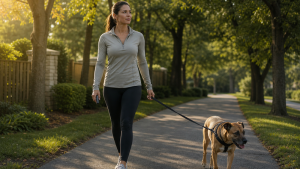
The stun baton fits people who want something with physical presence — a tool that works as a deterrent just by being visible, and delivers a serious response if it comes to that. It’s a good fit for someone walking a dog at night, someone who works security, someone who lives in a rural area where backup takes time, or someone protecting a home.
If you walk alone after dark — with a dog, on a trail, in a parking lot — a stun baton gives you reach, a bright flashlight, and stopping power in one package. I wrote more about that use case on the stun gun for walking your dog at night page, and much of it applies directly to stun batons. The extended reach matters when a dog — or a person — lunges fast.
At home, the size that might make a stun baton less convenient to carry on your person becomes an asset. It’s easier to grip under stress. It gives you striking reach without requiring you to close in on someone. For stun guns used in home defense, a baton-style device is worth serious consideration.
Stun batons are generally more affordable than consumer Tasers, which is a real factor for a lot of families. You shouldn’t have to choose between a quality safety tool and your grocery budget.
Who is a Taser the right fit for?
A Taser fits someone who wants maximum stopping effectiveness and can commit to learning the device — including understanding probe spread, targeting, and the one-shot dynamic. It fits a professional who carries it daily, a traveler who wants the most capable tool they can carry legally, or someone who takes their personal safety seriously enough to train with it.
Hotel staff and security workers come to mind immediately. The combination of range and neuromuscular effect is valuable when you’re dealing with an unpredictable person in a confined space — a hallway, an elevator lobby, a parking structure. We talk more about that specific situation on the stun gun for hotel staff page. For that environment, the Taser’s one-shot range advantage can make a real difference.
The honest limitation of a Taser is that it rewards preparation. If you buy it and put it in a drawer, it’s not helping you. You need to know how to draw it, how to aim the probes, and what to do if the shot doesn’t connect. That’s not a knock on the product — it’s just the truth. Every tool has a learning curve. This one has a little more than most.
Can you use a stun baton and a Taser together, or do you have to pick one?
You can absolutely carry both — and some people do, especially in security or professional roles. But for most individuals, one well-chosen tool used consistently and confidently is better than two tools you’re uncertain about.
If you want reach and simplicity in one package, a stun baton is a good single choice. If you want ranged stopping power and you’re committed to learning it, a Taser is a serious option. Some people carry a compact stun gun for everyday situations and keep a Taser in a vehicle or bedside drawer. The right answer is the tool you’ll actually have on you, in working condition, when you need it.
Whatever you choose, check your state and local laws before you buy or carry. Laws on stun devices and Tasers vary by state, and some cities have their own rules on top of that. I’m not a lawyer and I can’t give legal advice — just make sure you know what’s legal where you live before you make a purchase.
If you’re trying to compare different types of non-lethal options more broadly, our post on whether a stun gun or pepper spray is better for self-defense walks through the tradeoffs from a different angle and might help you think it through.
What are the most important things to know before buying either one?
First, check the law. I said it already and I’ll say it again. This matters.
Second, buy something you’ll actually carry. The best stun baton in the world doesn’t help you if it’s too bulky for your daily routine and stays in the car. The best Taser doesn’t help you if it’s sitting on a shelf because you never figured out how to use it. Fit your tool to your life, not the other way around.
Third, practice. Not with live electricity necessarily, but with drawing it, holding it, activating it, understanding how it works in your hands. Muscle memory is built before the moment you need it.
Fourth, pair it with awareness. I believe this down to my core. A tool is the second line. Awareness — of your surroundings, of who’s near you, of what feels off — is the first. No device replaces good situational awareness. They work together.
If you want something compact for everyday carry that doesn’t require a Taser’s one-shot commitment, take a look at the options on our pocket stun gun page. There are solid, reliable tools there that fit a purse, a jacket pocket, or a belt clip without any drama.
Frequently Asked Questions About Stun Batons and Tasers
What is the main difference between a stun baton and a Taser?
A stun baton requires direct contact — you press it against someone to deliver a shock. A Taser fires two probes on wires that can reach a target up to fifteen feet away. Both use electrical current, but a Taser causes neuromuscular incapacitation, which can drop someone regardless of pain tolerance. A stun baton relies more on pain compliance and requires you to be within arm’s reach.
Is a Taser more effective than a stun baton?
In terms of stopping power when it connects properly, yes — a Taser’s neuromuscular effect is generally more reliable at incapacitating a determined threat than a stun baton’s pain shock. But a Taser requires a successful probe deployment, and you get one shot. A stun baton is simpler to use under stress and can be applied repeatedly. Effectiveness depends on the situation and the user’s comfort with their device.
Can a stun baton stop an attacker?
A stun baton can absolutely cause enough pain and disruption to stop many threats. High-voltage contact from a stun baton is genuinely painful and startling, and in most cases it creates the opportunity to escape. It may be less reliable against someone who is highly intoxicated or has an extremely high pain threshold, since it works primarily through pain response rather than neuromuscular disruption.
Are stun batons legal to carry?
Stun batons are legal in most U.S. states, but laws vary significantly by state, county, and city. Some states require permits. Some prohibit them entirely or in certain locations. Always check your state and local laws before purchasing or carrying any stun device. Laws change, so verify current regulations rather than relying on what was true a few years ago.
How far does a Taser shoot?
Consumer-grade TASER devices typically reach between 15 and 16 feet for the probe deployment. That’s the distance from which the probes can fire and potentially make contact. Actual effective range depends on probe spread, the target’s clothing, and whether both probes connect. Some models are designed for greater spread between probes to improve the neuromuscular effect.
Do stun batons work through clothing?
Yes, stun batons work through clothing, though thick layers can reduce effectiveness. The electrical current passes through most fabrics. Direct skin contact produces a stronger effect, but even through a heavy jacket, a quality stun baton delivers a painful and disorienting shock. Some models have extended contact probes specifically designed to penetrate thicker material.
What happens if a Taser probe doesn’t connect?
If only one probe connects, or neither does, the neuromuscular effect won’t work — the current needs to flow between two contact points on the body. Many consumer TASER models allow you to use the front of the device as a direct contact stun in this situation, similar to a stun gun. This is called a drive-stun. It delivers pain but not full neuromuscular incapacitation. Knowing this fallback before you need it is important.
Which is better for someone who lives alone and wants something for home defense?
For home defense, a stun baton is worth serious consideration. The extended reach means you don’t have to close in on an intruder to use it. It works as a flashlight too, which is practical in a low-light situation inside a house. A Taser is effective but requires a probe shot in a confined space, which can be more difficult. For home use, the stun baton’s simplicity and reach are real advantages.
At the end of the day, both stun batons and Tasers are real tools for real situations. Neither one is a magic answer. What they both are is better than nothing — and far better than being unprepared. I built Herguarded because I believe everyone deserves options. Not hype, not fear tactics, just honest information and tools that work. Take the time to understand what you’re choosing and why. That’s what preparation actually looks like. Browse our full selection and find the tool that fits the life you’re actually living.