Hidden camera footage can be used as evidence in court, but whether it holds up depends on how and where you recorded it. Footage captured in spaces where you have a legal right to record — your home, your office, common areas you own or control — is generally admissible. Footage recorded in areas where someone has a reasonable expectation of privacy is typically not, and recording it may expose you to legal liability.
I want to be straight with you about something before we go further. I’m not a lawyer. Nothing in this post is legal advice, and self-recording laws vary by state and sometimes by city. What I can do is walk you through what most people get wrong, what you should understand before you set up a hidden camera, and how to give your footage the best possible chance of being taken seriously if you ever need it. That’s the kind of honest, practical information I’d give a family member — and that’s exactly what this is.
What makes hidden camera footage admissible as evidence in court?
Courts look at a few core factors when deciding whether to admit video evidence. The first is legality — was the footage recorded in a place and manner that the law permits? If you recorded in a space you own or control, like your living room, your front porch, or your place of business, you’re generally on solid ground. If you recorded in a bathroom, a bedroom guests use, or any space where a person has a reasonable expectation of privacy, that footage is almost certainly inadmissible — and you may face criminal charges for capturing it.
The second factor is authenticity. Courts want to know the footage hasn’t been edited, manipulated, or altered. This is one reason why the quality of your camera and the way you store footage matters more than most people realize. A clear, timestamped, unbroken recording from a quality device carries far more weight than a grainy, interrupted clip that could have been tampered with.
Third, courts consider chain of custody — meaning, how did the footage get from the camera to the courtroom? If you handed the footage directly to law enforcement or preserved it carefully on the original device, that’s a clean chain. If multiple people have handled or copied the files in unknown ways, a defense attorney will challenge its integrity.
Where can you legally use a hidden camera in your home or business?
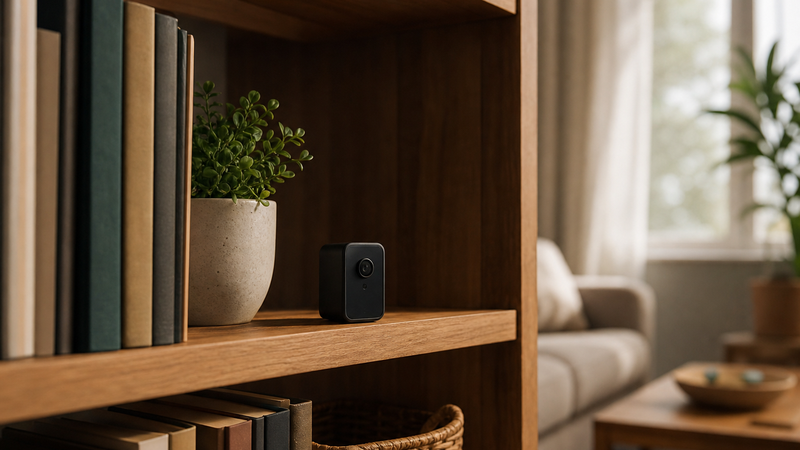
Your home is generally considered your domain. You can place cameras in living rooms, hallways, kitchens, entryways, and exterior areas like your front door, driveway, or backyard. These are spaces where no one — not a guest, not a caregiver, not a contractor — has an expectation of privacy that overrides your right to monitor your own property.
Where it gets complicated is in spaces guests or employees use that have inherent privacy expectations. Bathrooms are always off-limits. Guest bedrooms where someone is staying raise serious legal questions. Some states also have specific rules about recording in bedrooms even if the subject of the recording isn’t staying there. The rule of thumb is simple: if someone could reasonably expect not to be watched in that space, don’t put a camera there.
Businesses follow similar logic. Hidden cameras for the office are common and legal in most shared work areas — lobbies, stockrooms, reception areas, production floors. Break rooms are a gray area in some states. Recording areas where employees change clothes or use the restroom is illegal everywhere. If you’re using cameras in a business setting, posting a notice that video recording is in use is both a legal protection and an ethical standard I personally stand behind.
For families using cameras to monitor caregivers, the considerations are slightly different. Many states have specific “granny cam” laws that govern the use of cameras in elder care settings. I’ve put together resources on hidden cameras for elderly care that go deeper on this, because it’s one of the most important and emotionally charged uses of this technology — and you deserve to understand it clearly before you buy.
Does audio recording affect whether hidden camera footage is admissible?
Yes — and this is where a lot of people get tripped up. Video-only recording and audio recording are governed by different laws. Most states operate under what’s called “one-party consent” for audio, meaning you only need one person in the conversation to consent to it being recorded — and that person can be you. But a growing number of states require “two-party” or “all-party” consent, meaning everyone being recorded must agree to it.
If your hidden camera captures audio and you’re in an all-party consent state, the audio portion of your recording may be inadmissible — and in some cases the act of recording it may be a crime, even if the video component is perfectly legal. California, Illinois, Florida, Pennsylvania, and Washington are among the states with stricter audio recording laws. This isn’t a reason to avoid hidden cameras — it’s a reason to know your state’s laws before you buy and before you record.
The practical takeaway: if you’re unsure about your state’s audio consent rules, choose a camera with an option to disable audio recording. The video evidence alone is often more than enough.
How should you store and preserve hidden camera footage to protect its value as evidence?
The moment you think you’ve captured something that may be needed as evidence, stop overwriting it. Many hidden cameras record on a loop — when storage fills up, old footage is automatically deleted to make room for new footage. If you don’t act quickly, you lose the recording permanently.
Download the footage to a secure device immediately. Make a backup copy. Do not edit it, crop it, enhance it with software, or share it widely on social media before speaking with law enforcement or an attorney. Every time a file is copied, edited, or posted somewhere new, its chain of custody becomes more complicated to explain in court.
If you’re wondering how your specific camera stores footage or connects to your phone for remote access, I’d point you to our post on how hidden cameras connect to your phone — it covers local storage, cloud storage, and SD card options in plain language, which also affects how well you can preserve evidence.
When you hand footage to law enforcement, ask for documentation that they received it. Keep a copy for yourself. Write down the date, time, and circumstances under which you recorded it while everything is fresh. These notes can support your testimony later.
What kinds of situations are hidden cameras most useful for documenting?
Hidden cameras are particularly useful in situations where misconduct is ongoing, repeated, or difficult to prove without documentation. Families who suspect a caregiver is mistreating a loved one, homeowners who’ve had repeated theft or vandalism, business owners dealing with internal theft or harassment, landlords and tenants in disputes — these are real situations where clear, timestamped footage changes outcomes.
They’re also valuable as a deterrent. In many cases, the footage you never have to use is the most valuable of all — because knowing a camera is present changes behavior. That said, hidden cameras are tools with limits. They document what happens in the frame, when they’re running, with the storage they have available. They work best as part of a broader approach to safety and security, not as a standalone solution.
I’d also say this: the goal isn’t to build a case after something goes wrong. The goal is to protect the people you care about before something goes wrong. If footage helps you do that — either by deterring bad behavior or documenting it when deterrence fails — then it’s doing exactly what it’s supposed to do.
Frequently Asked Questions About Hidden Cameras and Court Evidence
Can footage from a hidden camera be used in a civil lawsuit?
Yes, legally obtained hidden camera footage can be submitted as evidence in civil cases, including divorce proceedings, child custody disputes, elder abuse claims, and workplace misconduct cases. The same rules apply as in criminal cases — the footage must have been captured legally, in a space where recording was permitted, and preserved without alteration. Consult an attorney about how to properly introduce it in your specific case.
Can someone sue me for recording them on a hidden camera in my own home?
Potentially, depending on where in your home you recorded and what your state’s laws say. Recording in common areas of your own home is generally protected. Recording in spaces with privacy expectations — a bathroom, a bedroom a guest is using — can expose you to civil liability and criminal charges. Know your state’s recording laws before you place any camera, even on your own property.
Does a hidden camera need a timestamp to be used as evidence?
A timestamp isn’t legally required, but it significantly strengthens your footage as evidence. Timestamped recordings are easier to correlate with other evidence and harder to challenge in court. Most quality hidden cameras include an automatic date and time stamp — make sure the time is set correctly when you set up the device, because a wrong timestamp can undermine otherwise solid footage.
What’s the difference between a nanny cam and a hidden camera?
The term “nanny cam” typically refers to a hidden or discreet camera used to monitor a caregiver — a babysitter, home health aide, or elder care worker — in a private residence. Legally, it’s the same device as any other hidden camera. What matters legally is where it’s placed and what it captures. In most states, recording a caregiver in common living areas is legal without their knowledge, but you should check your specific state’s laws and consider consulting an attorney.
Can I use hidden camera footage if the camera was recording without an SD card or cloud backup and the footage is gone?
No. If the footage was overwritten or was never saved, it doesn’t exist as evidence. This is one of the most common and painful mistakes people make — they had a camera running but didn’t have adequate storage, so the recording was deleted automatically before they realized they needed it. Set up cloud backup or use a high-capacity SD card and check your storage settings when you first install the camera.
Are hidden cameras legal in all 50 states?
The use of hidden cameras is legal in all 50 states under the right circumstances, but the specific rules about where you can record, whether audio is permitted, and what notice you must provide vary significantly by state. Some states require posted notice in workplaces. Some restrict placement in any space where privacy is expected. Always check your state and local laws before purchasing or installing any recording device. This post is not legal advice.
Can my landlord use a hidden camera as evidence against me?
A landlord generally cannot place hidden cameras inside a rental unit you occupy — that’s your private space. Recording inside your unit without your consent would likely constitute illegal surveillance in most states. Common areas of a building — lobbies, hallways, parking lots, laundry rooms — are a different matter. If you believe a landlord has placed unauthorized cameras in your rental unit, contact local law enforcement and an attorney.
Will law enforcement take my hidden camera footage seriously?
Generally, yes — if it’s clear, legally obtained, and preserved properly. Law enforcement regularly uses privately recorded footage in investigations. The key factors are image quality, continuity of the recording, and a clean chain of custody from the camera to the officer. Blurry, fragmented, or heavily handled footage is harder to work with. This is why camera quality and proper storage practices matter from the moment you set the device up.
Hidden cameras are honest tools when you use them honestly. They record what happens. They don’t lie, they don’t exaggerate, and when they’re deployed legally and thoughtfully, they give you something powerful: documented truth. That’s worth something in court, and it’s worth something long before a courtroom is ever involved.
If you’re considering a hidden camera for your home, your family member’s care, or your business, take the time to understand what you’re buying and how to use it correctly. Browse our selection and read the details — the right camera for your situation is the one you understand fully and set up properly. That’s how a tool becomes reliable protection.