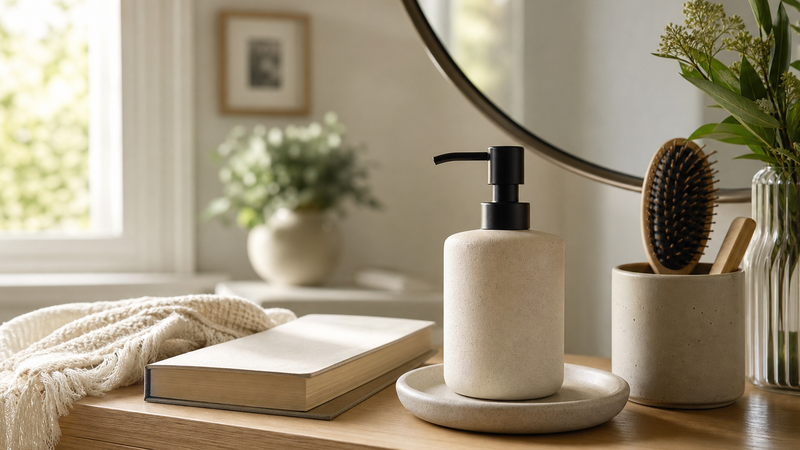
The most popular type of diversion safe is the household product replica — everyday items like books, canned goods, cleaning bottles, and personal care containers designed to look indistinguishable from the real thing. These outsell every other category because they work on a simple principle: a thief moving fast through your home will grab what looks valuable and ignore what doesn’t. A realistic-looking soap dispenser sitting on your bathroom counter doesn’t look like a target. That’s exactly the point.
The people who understand this best aren’t just security-minded — they’re discerning. They’ve thought it through. They know that a combination lock on a box screams “something valuable is in here,” and that the smarter move is to make valuables disappear in plain sight. At HerGuarded, I see buyers who want something that actually works, not just something that feels like it should. The most popular diversion safes earn that trust because they’re built to a standard where the deception is the security.
What makes household replica diversion safes the most trusted choice?
The defining quality of a great diversion safe is how unremarkable it looks. The best ones are manufactured with the same weight, finish, and texture as the actual product they’re imitating. That’s what separates the options worth owning from the ones that look off the moment someone picks them up.
Household replicas — canned goods, cleaning products, personal care items, books — work because they belong. A thief doesn’t have time to inspect every item in your home. Studies on residential burglary consistently show that the average break-in lasts under ten minutes. The intruder is looking for electronics, jewelry, and cash. They’re not turning over your cleaning supplies. A diversion safe that blends into your bathroom cabinet or kitchen pantry is effectively invisible to someone under that kind of pressure.
The craftsmanship on the better models is what earns them a place on the top shelf. Weighted bottoms that mimic a full product. Labels that are accurate down to the font. Containers made from the same materials as the originals. That level of detail is what makes the difference between a novelty and a serious security tool. If you want to see what realistic really looks like, our post on the most realistic-looking diversion safes goes into exactly that.
Which specific diversion safe styles are most popular, and why?
Within the household replica category, a few styles consistently lead in sales. Each one earns its place for a specific reason.
Book safes are the classic choice and still one of the most popular for good reason. A shelf of books is anonymous. Nobody goes through your library looking for cash. A hardcover book safe with a hollow interior holds a meaningful amount — rolled bills, a spare key, a small piece of jewelry — and it sits on a shelf looking like it’s been there for years. The limit is capacity: books work well for flat, compact items.
Canned goods safes are a step up in capacity and camouflage. A can of soup or vegetables in your pantry is about as unremarkable as it gets. The better canned safes have a removable false bottom and are weighted to feel like they’re full. Placed among actual groceries, they’re genuinely difficult to distinguish. These are particularly well-suited for people who want to store a small amount of cash or prescription medication without drawing attention.
Personal care and cleaning product safes may be the most strategically placed category. A soap dispenser diversion safe, for example, sits on a bathroom counter or next to a kitchen sink — in a room most people don’t associate with valuables at all. It’s accessible to you every day and completely unremarkable to anyone else. This category covers lotions, hairbrushes, shaving cream, and similar items. The bathroom placement alone is a strategic advantage.
Electrical outlet safes work differently — they mount flush to the wall and open to reveal a small cavity behind a realistic-looking outlet cover. These are harder to find because they don’t look like storage at all. Capacity is limited, but for a spare key, a USB drive, or folded bills, they’re nearly undetectable.
Where should you place a diversion safe for the best results?
Placement is half the strategy. A diversion safe placed in the wrong location defeats its own purpose. The right location depends on what you’re storing and what room it naturally belongs in.
The bathroom is one of the most underrated locations in the home for hidden storage. Thieves rarely spend time there — the room doesn’t read as a place where valuables live. A diversion safe designed for bathroom use — a soap dispenser, a shampoo bottle, a lotion container — fits right in and stays accessible to you without drawing any attention. This is especially practical for jewelry or medication you want to keep secure but accessible.
The kitchen pantry is another strong location. Canned goods and dry goods containers disappear on a shelf with other groceries. The trick is to actually stock your pantry so the safe doesn’t stand alone on an otherwise empty shelf. Context sells the camouflage.
The bedroom is the least ideal location, which surprises a lot of people. It’s actually the first room most thieves go to — they assume valuables are in dressers and nightstands. If you use a diversion safe in the bedroom, choose something that genuinely fits the environment and isn’t sitting near a jewelry box or on top of a dresser where valuables would normally be.
For people who need protection on the road, the strategy shifts. Diversion safes built for travel are designed for hotel rooms and luggage — compact, unremarkable, and designed to secure what matters when you’re away from home. The same logic applies: what looks like something ordinary won’t be touched.
How do diversion safes compare to traditional small safes or lockboxes?
This is where the practical thinking separates serious buyers from casual ones. A combination lockbox tells everyone in the room that something worth locking up is inside. A residential burglar who finds a small lockbox will take it with them and open it later. The lock is an advertisement, not a deterrent.
A diversion safe operates on an entirely different principle: obscurity. Nothing signals that there’s anything of value present. The container isn’t taken because it isn’t identified as a target. This doesn’t make diversion safes superior in every situation — they have limits in capacity and they don’t protect against someone who has time to search carefully. But for the realistic threat — a fast-moving intruder looking for obvious targets — the diversion safe outperforms the lockbox precisely because it doesn’t look like one.
The two approaches aren’t mutually exclusive. A person who owns a small mounted safe for larger items and a well-placed diversion safe for daily-carry valuables has a layered strategy. That’s the approach someone who has actually thought this through tends to take.
Are diversion safes useful in the car?
Yes, and this is an underused application. Smash-and-grab thefts from vehicles are quick and targeted — thieves are looking for bags, electronics, and anything that reads as valuable. A container that looks like a sunscreen bottle or a travel mug in your center console or cup holder doesn’t read as a target at all.
Car diversion safes are designed specifically for vehicle use — compact sizes, styles that fit naturally in a glove box or console, and containers that won’t raise an eyebrow. For someone who regularly leaves a vehicle in a parking structure or travels frequently, this is a legitimate layer of protection that requires no installation and no combination to remember.
How do you choose the right diversion safe without second-guessing yourself?
Start with the room. The best diversion safe is the one that genuinely belongs in the space you’re putting it. Walk through your home and ask what’s already on those surfaces. Then match the safe to the environment — not the other way around. A soap dispenser makes sense on a bathroom counter. A canned good makes sense in a pantry. A book makes sense on a shelf with other books.
Then consider what you’re storing. Small, flat items — folded bills, a spare key, a USB drive — fit in most styles. Jewelry or a small handgun require something with more interior volume. Know your capacity requirement before you choose your container.
Finally, look at build quality. The realistic ones have weight to them. The labels are accurate. The materials match the original product they’re imitating. A cheap imitation with an obviously fake label is worse than nothing, because it draws attention instead of deflecting it. If you’re not sure where to start browsing, the guide to where to buy a diversion safe breaks down what to look for and where to find the options worth your money.
Frequently Asked Questions About Diversion Safes
What is the most popular type of diversion safe?
Household product replicas are the most popular category — canned goods, cleaning products, personal care items, and book safes. They work because they belong in the environment where they’re placed. A thief moving quickly through a home ignores what looks ordinary. These safes use that instinct against the intruder. The soap dispenser and canned goods styles consistently lead in sales because their camouflage is most convincing in everyday settings.
How much can a diversion safe hold?
It depends on the style. A book safe or large canned goods safe can hold rolled cash, a small piece of jewelry, a spare key, or folded documents. A soap dispenser or lotion bottle typically holds smaller items — cash, keys, a USB drive. Electrical outlet safes have the smallest capacity. Know what you’re storing before choosing a style. Capacity is the main practical tradeoff compared to a traditional lockbox.
Are diversion safes fireproof or waterproof?
No. Standard diversion safes are not fireproof or waterproof. They’re designed for concealment, not environmental protection. If you need to protect documents or items from fire or water damage, a rated fire safe is the right tool for that. Many people use both — a fire safe for important documents and a diversion safe for daily-access valuables like cash and jewelry.
Can a diversion safe replace a real safe?
Not entirely. A diversion safe is a concealment tool, not a hardened security device. It excels at defeating fast, opportunistic theft. It won’t withstand a prolonged search or a determined thief who knows what they’re looking for. For high-value items or irreplaceable documents, a mounted or anchored safe is still the right foundation. A diversion safe adds a practical, accessible layer to that strategy.
Where is the best place to put a diversion safe in a home?
The bathroom and kitchen pantry are two of the strongest locations. Thieves spend little time in bathrooms and rarely associate them with valuables. A pantry is similarly overlooked. The bedroom is actually one of the weaker locations — it’s often the first place an intruder searches. The rule is simple: place the safe in the environment where it naturally belongs and where a stranger wouldn’t expect valuables to be stored.
Do diversion safes work in hotel rooms?
Yes. Travel-sized diversion safes are designed for exactly this use. A container that looks like a travel toiletry or personal care product sitting in a bathroom or luggage bag won’t attract attention from hotel staff or anyone who enters the room without permission. They’re not a substitute for the in-room safe for larger items, but they’re a smart complement for cash, a passport copy, or small electronics.
How do I make sure my diversion safe actually looks realistic?
Buy quality. The difference between a convincing diversion safe and a disappointing one comes down to weight, label accuracy, and materials. A well-made canned goods safe weighs close to a full can. A good soap dispenser looks and feels like a real one. Place it among similar items — real products from the same brand or category. Context is as important as the safe itself. A single can on an empty shelf doesn’t convince anyone.
Is it legal to own a diversion safe?
In general, yes — diversion safes are legal to own in the United States. They’re personal property storage containers, not weapons or controlled items. That said, I always encourage people to be aware of any local regulations that might apply to their specific situation. I’m not a lawyer and this isn’t legal advice — just a reminder that it’s always worth a quick check if you have any doubt about your local laws.
The people who invest in a quality diversion safe aren’t doing it out of paranoia. They’re doing it because they’ve thought through what realistic security actually looks like — and they understand that the most effective hiding place is one nobody thinks to look in. That’s not a trick. That’s just smart preparation.
Browse the full selection of diversion safes at HerGuarded to find the style that fits your home, your routine, and what you need to protect. Every option we carry is chosen because it does the job it’s supposed to do — nothing more, nothing less.