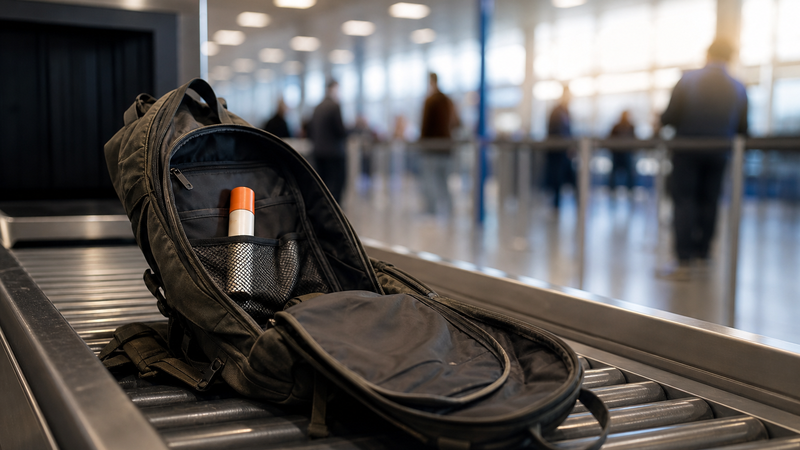
No, you cannot fly with bear spray. The TSA prohibits bear spray on commercial aircraft in both carry-on and checked baggage. Bear spray is classified as a hazardous material because of its pressurized canister and high concentration of capsaicin. It falls outside the allowable pepper spray exemption for checked baggage — that exemption does not apply to bear spray.
Most people don’t find this out until they’re standing at a security checkpoint with a $50 canister that’s about to get confiscated. The rule sounds simple enough on the surface, but the full picture — what you can fly with, what you can’t, and what options you have when you get to your destination — has more to it than a TSA sign at the bin line will ever tell you.
Here’s what the regulations actually say, why they say it, and what experienced travelers and backcountry hikers do instead.
Why is bear spray banned on airplanes when regular pepper spray is not?
This is the part that catches most people off guard. You may have heard that small pepper spray canisters are allowed in checked luggage under certain TSA conditions. That’s true — but bear spray doesn’t qualify, and the reason comes down to two things: container size and concentration.
The TSA permits a single pepper spray canister in checked baggage if it contains four ounces or less and has a safety mechanism to prevent accidental discharge. Bear spray canisters are typically 7.9 to 10.2 ounces — far above that four-ounce ceiling. That alone disqualifies them from the checked baggage exemption.
Beyond size, bear spray contains a significantly higher concentration of capsaicinoids than personal defense pepper sprays. Products like pepper spray designed for personal protection typically run between 1% and 2% major capsaicinoids. Bear spray runs between 1% and 2% as well by EPA regulation, but the total volume of capsaicin delivered per burst is dramatically larger. That quantity, combined with a pressurized aerosol canister designed to project 25 to 35 feet, puts it squarely in hazardous materials territory under federal aviation regulations — not just TSA policy, but FAA rules that carry their own penalties.
In the cargo hold of an aircraft, a canister that discharges — even accidentally — could incapacitate crew or cause a serious incident. Airlines and regulators aren’t willing to accept that risk. The ban isn’t ambiguous. It’s firm.
What happens if you try to bring bear spray through airport security?
It gets taken. That’s the short answer. TSA officers will confiscate it at the checkpoint. You won’t be able to check it poolside at the counter either — airlines maintain their own hazmat lists aligned with FAA regulations, and bear spray appears on them.
If you attempt to conceal bear spray in checked luggage and it’s detected — and checked bags are screened — the outcome depends on how it’s discovered and where. At minimum, it gets removed. At maximum, you’re looking at a civil penalty from the FAA. The agency has levied fines in the thousands of dollars for undisclosed hazardous materials in checked baggage. It’s not a gamble worth taking over a canister you can replace at your destination.
The practical move, if you’re flying into bear country, is to ship your bear spray ahead to your lodging or rental cabin if they’ll accept it, or — more commonly — buy it when you land. Outdoor retailers and sporting goods stores near national parks and wilderness trailheads carry it. Ranger stations sometimes loan or rent it. It’s inconvenient to source on arrival, but far less inconvenient than a federal fine.
Can you bring small pepper spray on a plane for personal protection?
Yes — under specific conditions, and only in checked baggage. One container, four ounces or less, equipped with a safety mechanism to prevent accidental discharge. That’s the full extent of what’s allowed. Nothing in a carry-on. Nothing above four ounces in checked bags. Nothing that qualifies as a hazardous material under FAA definitions.
Personal defense pepper sprays — the kind designed for humans, not bears — can meet those conditions if you’re carrying a smaller canister. Many of the Mace, Wildfire, and Pepper Shot options sold here come in compact sizes that would fall within the weight limit. But you still need to verify two things before you pack one: that it has a functional safety, and that the destination state or city permits possession. Pepper spray laws vary by state, and some cities have their own restrictions on top of that. Always check local law before you fly with anything — I’m not a lawyer and this isn’t legal advice, just a real reminder to do your homework before you land somewhere with different rules than home.
If you’re traveling for personal safety reasons and prefer not to deal with checked bag restrictions at all, a personal alarm is worth considering. A loud alarm doesn’t need to be checked, declared, or left at the checkpoint. It’s one of the quietest tools people overlook, and it draws attention fast in a way that needs no explanation.
What should you carry for personal protection when you can’t bring bear spray?
This is the question most travel safety guides skip past entirely. You’ve landed. Your bear spray is sitting in a sporting goods store you haven’t found yet. What do you carry between the airport and the trailhead?
A few options hold up well under travel conditions. A compact pepper spray canister — within legal limits for your destination — can go in checked baggage. If you’re traveling light or domestic with a carry-on only, a personal alarm gives you something with zero restrictions. A 130dB alarm is loud enough to be disorienting in an enclosed space and to draw attention in an open one. It’s not a substitute for distance tools in genuine wildlife encounters, but for personal safety in cities, hotels, and parking structures, it does what it’s supposed to do.
For anyone concerned about wildlife specifically — and not just general personal protection — bear spray is the right tool for that environment, and the answer is to source it at your destination rather than fly with it. Check if there’s an outfitter near your trailhead before you leave home. Many of them rent canisters specifically because this is a common situation. If you want to read more about when and how pepper-based deterrents hold up against specific wildlife threats, I covered that in detail in my post on whether bear spray works on mountain lions — worth a read if you’re heading into territory where the threats aren’t just bears.
Are there alternatives to bear spray that are legal to fly with?
Not in the sense of a direct wildlife deterrent — nothing you can legally carry aboard a commercial flight will replicate what bear spray does in a bear encounter. The volume, the range, the concentration — none of that fits into what aviation regulations allow in any form.
What you can fly with are tools designed for human threat scenarios: compact personal alarms, small pepper spray canisters within the checked baggage rules, and personal safety devices that don’t fall under hazmat classifications. These don’t replace bear spray in backcountry situations. Anyone going into serious bear country needs to understand that distinction clearly and plan accordingly.
The honest answer is that there’s no shortcut here. Bear country requires bear tools, and bear tools require planning your logistics around the flight restriction rather than trying to work around it. Buy local. Ship ahead. Rent at the trailhead. Those are the options, and all three of them work.
Frequently Asked Questions About Flying With Bear Spray
Can I pack bear spray in my checked luggage?
No. Bear spray is prohibited in both carry-on and checked baggage on commercial flights. The TSA’s pepper spray exemption for checked bags is limited to canisters of four ounces or less, and bear spray canisters typically exceed that limit by a significant margin. The FAA also classifies bear spray as a hazardous material, which adds another layer of prohibition beyond TSA rules.
What is the TSA rule for pepper spray in checked bags?
The TSA allows one container of mace or pepper spray in checked baggage only — no carry-on. It must be four ounces or less by weight and must have a safety mechanism that prevents accidental discharge. Any spray with more than 2% by mass of tear gas (CS or CN) is prohibited entirely. Always check the TSA website for the most current guidance before you fly.
Can I ship bear spray to my destination before I fly?
Some carriers allow it with proper hazmat packaging and labeling, but regulations vary by carrier and destination. USPS has strict limits on hazardous aerosols. UPS and FedEx allow certain hazmat shipments under specific conditions. Contact your carrier directly and check with your destination lodging before attempting to ship bear spray. It’s worth the call — it can save you the hassle of sourcing it on arrival.
What happens if TSA finds bear spray in my bag?
It will be confiscated. If it was in a checked bag and discovered during screening, you may also face a civil penalty under FAA regulations. The fine for undisclosed hazardous materials in checked baggage can reach several thousand dollars depending on the circumstances. Declaration doesn’t get it allowed — it still can’t fly. It just determines whether you’re looking at confiscation or confiscation plus a fine.
Can I fly internationally with pepper spray or bear spray?
No. International flights follow IATA hazardous materials regulations, which align with — and in many cases are stricter than — FAA and TSA rules. Bear spray is universally prohibited on international commercial flights. Personal pepper spray in small quantities may be permitted by some carriers in checked baggage, but destination country laws on possession vary widely. Research the laws of your destination country before packing any defensive spray.
Is there any wildlife deterrent I can bring on a plane?
Not one that functions the way bear spray does. Personal alarms, noise-making devices, and bear bells are not restricted and can fly as carry-on or checked. They serve a different function — alerting wildlife to your presence before a close encounter — rather than stopping an active charge. They’re useful tools in the field but are not a replacement for bear spray in high-risk wildlife areas.
Where can I buy bear spray near national parks or trailheads?
Most major national parks have outfitters, visitor centers, or nearby sporting goods stores that carry bear spray. Some ranger stations offer loaner programs or rentals. Searching for outfitters or outdoor retailers near your specific park or trailhead before you leave home will save time. Many hikers fly without it and buy or rent it within a few miles of where they start their trail.
Does the four-ounce pepper spray rule apply to driving across state lines?
No — the four-ounce TSA rule only applies to air travel. Ground transport is governed by state laws, not aviation regulations. Most states permit pepper spray in a vehicle, but restrictions on canister size, concentration, and age of purchaser vary by state. Some states restrict certain formulations or require specific label information. Check the laws of every state you’ll pass through, not just your origin and destination.
Planning a trip into bear country takes real preparation — gear, routes, emergency contacts, and yes, figuring out how you’re getting your bear spray from here to there. The flight ban isn’t going away, and there’s no workaround that doesn’t carry risk. What there is, is a clear path: know the rule before you pack, plan to source your spray at your destination, and make sure the rest of your safety kit — personal alarm, communication device, and situational awareness — travels with you the whole way.
If you’re looking at options for everyday personal protection that fly without restrictions, browse our personal alarm selection or take a look at what fits within the checked baggage rules for pepper spray. Be aware. Be prepared. Have a plan before you leave home.